









 Add to Cart
 Calculate delivery
Product Description
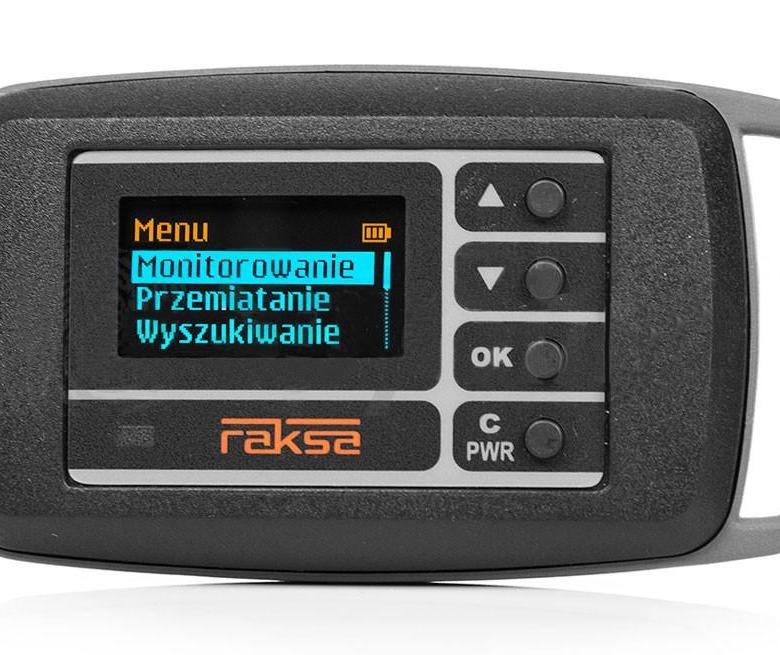
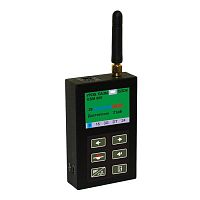
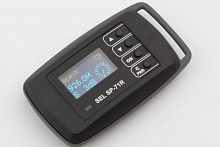
RAKSA-120-selective field indicator
The range of received frequencies: 40-3800 MHz (extended range!). Designed for near-field detection and location detection of radio transmitting devices.
The selective field indicator RAKSA-120 is designed to detect in the near zone and determine the location of radio transmitting devices used for covert recording of audio and video information.
The RAKSA-120 field indicator allows you to detect:
- GSM900/1800, UMTS(3G), CDMA450 cellular phones DECT
- wireless phones
- Bluetooth and Wi-Fi devices
- wireless video cameras
- radio transmitters with analog modulation (AM, FM, FM)
- radio transmitters with digital modulation and continuous carrier (FSK, PSK, etc.)
- radio transmitters with broadband modulation with a band up to 10 MHz
According to the principle of operation, the selective field indicator RAKSA-120 is a high-speed superheterodyne receiver with a low IF and a frequency synthesizer. The cycle time for scanning and analyzing all digital and analog signals does not exceed 1.5 seconds. The RAKSA-120 field indicator can operate in the guard, survey, search, spectrum subtraction search, and digital signal monitoring modes.
Distinctive features of the RAKSA-120 field indicator:
- selective reception of radio
- signals high speed of scanning and analysis
- detection of broadband and digital signals
- adaptation to the background in the guard mode
- search capability with spectrum subtraction
- audio monitoring of signals
- frequency and signal level measurement
- alarm event log
- silent alarm indication (vibration signal)
- no external antenna
Security mode
Protection mode is designed for permanent monitoring of the detected analog and digital radio signals automatically (without operator intervention) and alarm in case of threat signal, i.e. a signal with a level exceeding the threshold. The guard mode is used in cases when the source of the dangerous radio signal is initially absent or inactive. Information about alarm events is stored in the log.
In the guard mode, the background spectrum is subtracted for analog signals. This reduces the impact of stationary (constantly present) interfering signals and interference. The background spectrum adaptation algorithm tracks slow changes in the levels of these interfering signals.
Overview mode
The overview mode is designed to detect all types of analog and digital radio signals. In this mode, the display shows a list of all currently detected signals, sorted by frequency or signal type.
Search Mode
The search mode is designed to detect and locate analog and digital radio transmitters. The display shows the signal with the maximum level. This mode is used in cases where it is possible to move the field indicator to search for a radio transmitter.
In the search mode for the analog signal, a light and sound indication of the relative signal level is implemented – by the frequency of repetition of the LED flashes, you can judge the approach or distance from the radio transmitter.
Search mode with spectrum subtraction
The spectrum subtraction search mode is designed to detect and locate analog radio transmitters. Using this mode has advantages over the normal search mode if the radio transmitter is located in the same room.
In the search mode with spectrum subtraction, it is not the absolute level of analog signals that is determined, but the relative level-its difference with the base spectrum that was measured at the beginning of operation in this mode. It is known that when approaching or moving away from a radio transmitter that is located inside the room, the signal level changes more strongly, compared to a radio transmitter located outside the room. Since in the search mode with spectrum subtraction, the field indicator selectively reacts to changes in the level, local radio transmitters are more likely to be detected.
In the search mode with spectrum subtraction, light and sound indication of the relative signal level is implemented.
Digital signal monitoring
The digital signal monitoring mode is designed to detect signals from GSM900/1800, UMTS(3G), CDMA450 cell phones, DECT wireless phones, Bluetooth, Wi-Fi devices, and other pulse signals in the 2.4 GHz band. In digital signal monitoring mode, the display shows a list of all digital signals and their detected levels.
Audio Monitoring
Audio monitoring of analog signals is possible in the review, search and search modes with spectrum subtraction. During audio monitoring, the amplitude-modulated signals are listened to through the built-in speaker. The use of audio monitoring in some cases facilitates the identification of signals and allows the use of "acousto-linking".
Alarm event Log
The alarm event log stores information about dangerous radio signals that were detected in the guard mode. The maximum number of entries is 200. If different types of dangerous signals are detected at the same time, information about each of them is stored in the log. When viewing the recording, the display shows the time when the signal appears and disappears, its type and maximum level.
Technical characteristics
received frequency range 40-3800 MHz
typical sensitivity of 70 mV/m
Dynamic range 50 dB
bandwidth пропускания 10 MHz
full scan cycle time ≤ 1.5 s
working time in the security mode 4-12 hours
operating time in other modes 3 hours
display OLED, 128 x 64
dimensions 77 x 43 x 18 mm
weight 35 g
 Add to Cart
 Comparison
















Copyright 2008-2022 © NAUSHNIKA.NET - The first Online Store of Earpiece. All rights reserved. Sankt Eriksgatan 82, 113 62 Stockholm, Sweden, |